Pubblicato il 21 Ottobre 2026
At a legendary crossroads of East and West, along traveler’s Silk Road, flows the Amu Darya, the historic river known to the ancient Greeks as the Oxus and in Sanskrit as the Vakhsu. This vital waterway shapes a vast region nesting largely at 3,000 meters between the Tian Shan and Hindu Kush mountains and dominated by the majestic Pamir Plateau towards neighbouring China—a land known today as Tajikistan.
A curated selection of this nation’s extraordinary cultural heritage—a rich tapestry weaving together Hellenistic, Buddhist, Zoroastrian, and Islamic influences—was unveiled at the MUCIV-Museo delle Civiltà in Rome, Italy. The exhibition, titled Tajikistan: The Land of Unique Heritage, is now open to the public and will run until January 20, 2027.
The display features exceptional masterpieces specially brought to Rome for the first time from The National Museum of Tajikistan in Dushambe, including Achaemenid bronze ram heads, Buddhist sculptures from Ajina Tepe, and intricate carved woodwork from the palace of Bunjikat. Visitors can also marvel at artifacts from Takht-i-Sanjin, one of Central Asia’s most significant archaeological sites, alongside the famous Kneeling Man wall fresco. This stunning fresco was discovered in ancient Penjikent, a prominent Sogdian center so renowned for its monumental architecture and vibrant murals that it is widely celebrated as the “Pompei of the East.”
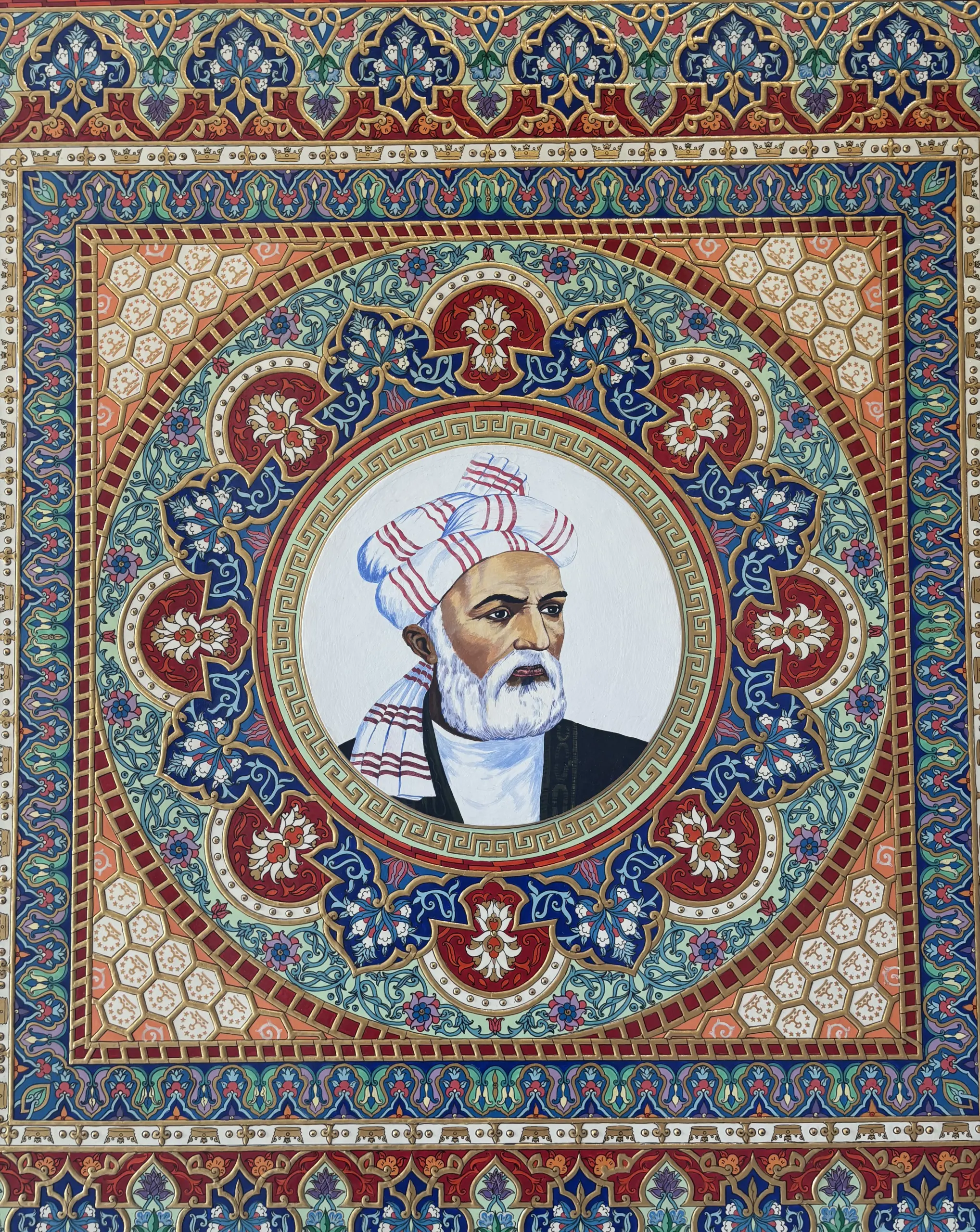
The archaeological artifacts showcase 2.500 years of a history that ranges from the VI century a.C. to the XXI century, demonstrating how the art preserved at the National Museum of Tajikistan masterfully blends an extraordinary hybridization of techniques that combine fresco with miniature painting techniques or classical drapery with Gandharan art. The exhibition further highlights legendary figures of literature like persian poet Ferdowsi, whose epic masterpiece of 50,000 verses, the Shahnameh chronicles some of the world’s most ancient mythologies, still largely read in today’s Tajikistan. The contemporary roots of both the region and Tajikistan run deep within this epic. The nation maintains an enduring bond with the poet through its language: “New” Persian. As an Indo-European language, Persian historically unites a vast cultural sphere spanning former Soviet republics and the ancient Persian Empire (pre-Arab and pre-Mongol invasions). Today, it remains the official language of Tajikistan, uniquely written in the Cyrillic alphabet rather than the Arabic script.
Finally, the exhibition celebrates the country’s rich textile heritage, showcasing vibrant silk and cotton Chakan embroidery—a brilliant expression of the broader Suzani tradition. Also on display are traditional musical instruments like the tar and setar, alongside their dutor and rubab variations, which present fascinating evolutions of multiple stringed instruments seamlessly combined into one.
This diverse and colorful journey ends in the grandiose carrara marble rooms of the italian civilizations museum with a taste of authentic tajiki delicacies, including traditional sweets, flatbreads, and pistachios directly brought from the capital, Dushanbe for the event. These treats awaited all press and visitors arriving for the official opening to experience this extraordinary cultural heritage – but they’re finished you’ll simply have to travel to Central Asia to taste them.
Melissa Pignatelli
Tajikistan. The Land of Unique Heritage. Exhibition at MUCIV – Museo delle Civiltà, Piazza Guglielmo Marconi 8, Eur, Roma, Italy – open until January 20, 2027.
A project curated by the National Museum of Tajikistan and designed by the architect Luisa Grasso, in collaboration with the MUCIV officials Laura Giuliano, Serena Francone, Pierfrancesco Fedi, and Adriano Napoli.
Photograph of the portrait of Ferdowsi on display in the exhibition, “powerful is he who is wise” by Melissa Pignatelli.